

Slow packing can block the whole coffee line. Weak seals can leak aroma. Bad dosing can eat profit. These problems feel small, yet they can grow into daily chaos.
You choose the right coffee packaging machine by matching your coffee format and bag style to the correct machine type, then checking real output, weighing accuracy, seal quality, changeover time, and service support against your daily target and growth plan.
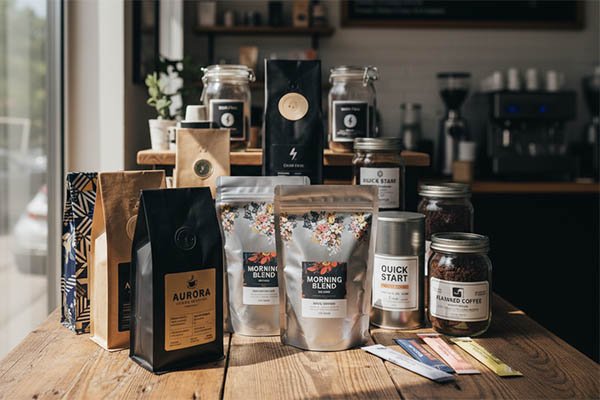
You do not need to guess. You can treat this as a clear checklist. The goal is simple: keep coffee fresh, keep output steady, and keep costs predictable. The sections below help you sort machine types first, then features, then selection rules by factory size.
Which Coffee Packaging Machine Type Fits Your Product and Bag Style Best?
Many teams start by looking at speed. Then they learn that bag style, coffee format, and freshness needs decide more than speed. A wrong match can cause jams, dust issues, and seal leaks.
Start by matching the machine category to what you pack: beans, ground coffee, or capsules, and to how you sell: premade pouches, roll-film bags, capsules, or jars. This first match removes most bad options before you compare brands and prices.
Start with the coffee format
Coffee beans flow well, yet they can bounce and trap air. Ground coffee can bridge, dust, and stick on sealing areas. Capsules need micro-accurate dosing because headspace is limited. Jars need clean filling and stable capping.
Then lock the package format
If the market demands zipper stand-up pouches, a premade pouch system often fits. If cost per pack and high output matter most, VFFS with roll film often wins. If you sell single-serve, capsule fillers are a different world.
Use this quick mapping before deeper comparisons
| Your main need | Typical best machine category | Notes that often decide the final choice |
|---|---|---|
| Premium pouch look, many SKUs | Premade pouch machine | Fast changeover, higher pouch cost |
| High volume and lower pack cost | VFFS (roll film) machine | Best for long runs, needs film tuning |
| Single-serve growth | Capsule / K-cup filler | Tight accuracy, high QA demand |
| Specialty gift or premium shelf | Jar or bottle line | Capping and labeling matter a lot |
This mapping keeps the selection simple. After that, you can compare features with less noise.
When Should You Choose a Premade Pouch Packing Machine for Coffee?
A pouch may look great on shelf, yet the line can suffer if pouches do not open well or if powder hits the seal area. You also may worry that premade pouches cost more than roll film.
Choose a premade pouch machine when you need flexible pouch styles, frequent size changes, strong shelf appearance, and stable sealing on zipper or flat-bottom bags. Pair it with the right weigher or auger so the filling stays accurate and clean.
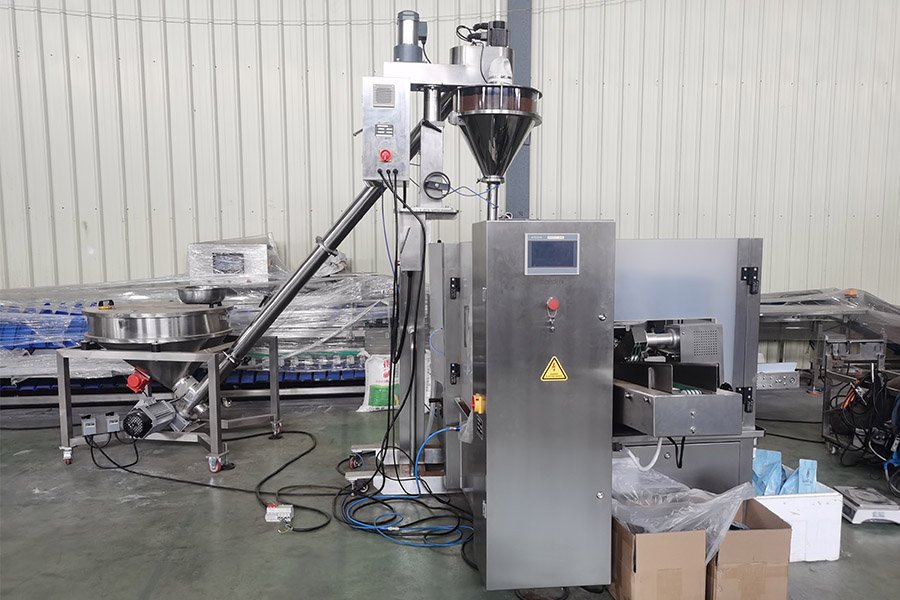
What the process looks like
A premade pouch machine takes empty pouches from a magazine, opens them, fills them to target weight, then seals. This workflow supports many pouch types, like doypack, zipper pouch, flat pouch, and flat-bottom bag.
Where premade pouch systems win
Premade pouch systems often help when a brand sells many SKUs. A team can switch from 250g to 1kg bags with less downtime, if the machine is designed well. The pouch shape also supports premium pricing in many markets.
What can go wrong if the match is poor
Ground coffee can create dust. That dust can land on the heat seal area. Then micro-leaks happen. Beans can also trap coffee oils on sealing jaws over time. So the machine must support easy cleaning and stable sealing pressure.
What to check before buying
| Checkpoint | What good looks like | What to request during testing |
|---|---|---|
| Pouch opening success rate | Clean opening, low mis-pick | Run your own pouch samples for 1–2 hours |
| Seal integrity | No channels, no burn, no wrinkles | Seal strength test and leak check method |
| Filling cleanliness | Low dust on seal zone | Dust control design and cleaning steps |
| Changeover time | Simple parts, clear settings | Time a real size change with your operators |
| Freshness options | Valve support, nitrogen flush option | Proof of integration and stable running |
Tertiary note: beans vs ground coffee dosing
Beans often pair well with a multihead weigher. Ground coffee often needs an auger filler or a dust-managed feeding and dosing system. The best setup depends on your grind size and oil level. This is why product testing matters more than a brochure.
When Is a VFFS Coffee Packaging Machine the Smarter Choice?
High volume targets can create pressure fast. If output is short, roasting and grinding may have to slow down. Labor costs can also rise when the line stops often. You need a system that runs steady for long shifts.
Choose a VFFS machine when you need high output, lower packaging material cost, and stable long runs. VFFS forms bags from roll film, fills coffee, and seals in one continuous flow, and it can integrate a one-way valve for fresh roasted coffee.

Why VFFS is common in industrial coffee packing
VFFS uses roll film, so the cost per pack is often lower than premade pouches. It also supports high speed when the bag style is consistent and the line runs long batches. Many factories use pillow bags, gusseted bags, and quad-seal bags on VFFS.
Freshness factor: one-way degassing valves
Fresh roasted coffee releases CO₂. If gas stays trapped, bags can swell. If oxygen enters, flavor drops faster. One-way valves solve this by letting CO₂ out while blocking oxygen from entering. Valve integration must be stable and repeatable. If the valve placement drifts, seals can fail.
What to check on VFFS performance
VFFS performance depends on film control, sealing temperature stability, and dosing consistency. If film tension is unstable, seals can wrinkle. If sealing temp swings, leaks can show up days later.
| VFFS focus area | Why it matters | Simple factory check |
|---|---|---|
| Film tracking and tension | Prevents mis-seals and wrinkles | Run at target speed for a full film roll test |
| Seal jaw design | Coffee oils and dust can weaken seals | Inspect seal area after 2 hours of running |
| Bag length accuracy | Prevents cut errors and rejects | Measure bag length variation over 100 bags |
| Valve integration | Protects fresh roasted coffee | Verify placement accuracy and leak testing |
| Weigher integration | Prevents giveaway and underweight | Compare target vs actual weights on samples |
Tertiary note: real speed vs brochure speed
A supplier may quote a high number. Real speed depends on bag style, film type, valve, dosing method, and operator rhythm. A realistic target is the speed you can run for hours with low stops, not the peak shown in a demo.
When Is a Coffee Capsule Packaging Machine the Smarter Choice?
Capsule buyers expect the same taste every time. Yet capsules leave almost no room for dosing error. A small weight drift can change extraction. A weak seal can ruin shelf life and trigger complaints.
A coffee capsule packaging machine is the smarter choice when your growth depends on single-serve formats, you need very tight dosing accuracy, and you must seal each unit with stable heat and pressure at high speed, with built-in quality checks.

Capsule lines work best when the full process is treated as one controlled system. A typical line includes capsule denesting, dosing, tamping, foil placement, heat sealing, coding, and reject control. Throughput is often strong, yet the line only stays stable if coffee feeding stays even and if dust control is planned. Ground coffee can carry static and fine particles. Those particles can land on the sealing rim. Then micro-leaks appear later in storage. So sealing area cleaning and dust extraction are not “nice to have.” They are core uptime tools.
Capsule selection also depends on capsule type. K-cup style, Nespresso-compatible, and compostable capsules all behave differently in sealing and handling. Compostable materials may need tighter temperature windows and longer dwell time. That can lower speed if the machine is not designed for it. Quality control matters more here than in many bag lines because every capsule is a finished unit. That is why many plants add online weight checks, vision inspection for lid presence, and seal integrity monitoring.
| Capsule line checkpoint | Why it matters | What to verify during trials |
|---|---|---|
| Dosing method (auger / vacuum / gravity) | Controls weight stability and taste | 30–60 min run with your grind and humidity |
| Weight accuracy | Prevents weak brew and overfill jams | Sample weights across 200+ capsules |
| Seal temperature and dwell control | Protects shelf life and avoids burn-through | Seal peel test and leak check method |
| Dust control at sealing rim | Reduces micro-leaks and rejects | Rim cleanliness after long run inspection |
| Lid placement and detection | Prevents open capsules in cartons | Vision or sensor reject logic demo |
| Changeover between capsule sizes | Supports SKU growth | Time a full format change with operators |
If the business plan includes retail multipacks, the capsule filler is only part of the decision. Secondary packaging like cartoning, case packing, and palletizing can become the real bottleneck. So the smarter choice is often a capsule system that is designed to connect to downstream automation, with data signals that allow reject tracking and line balancing.
What Features and Selection Criteria Should Guide Your Final Purchase?
It is easy to compare price tags. It is harder to compare daily operating cost. A cheap machine can become expensive through downtime, giveaway, and spare parts delays.
Use a selection scorecard that weighs accuracy, real throughput, package compatibility, cleaning and maintenance time, build quality, and support response. Then match the final configuration to your business size and growth plan.
Core features that affect profit and quality
Weighing accuracy controls giveaway. Sealing quality controls freshness. Real throughput controls unit cost. Ease of cleaning controls uptime, especially with ground coffee dust and coffee oils.
| Feature | What it protects | What “good” looks like |
|---|---|---|
| Weighing accuracy | Margin and legal compliance | Stable weights across product variation |
| Throughput stability | Output and labor cost | Fewer stops, repeatable cycle time |
| Seal quality control | Aroma, shelf life, brand trust | Strong seals, low leak rate |
| Changeover design | SKU flexibility | Tool-free or low-tool, clear recipes |
| Build material | Hygiene and durability | SUS304 contact parts, food-safe design |
| Service and spares | Downtime risk | Fast remote support, local parts plan |
Match the machine to your business size
Small roasters often need flexibility and a controlled budget. Medium plants often need higher speed and better automation. Large plants need complete lines and strong quality control systems.
| Business size | Practical packaging goal | Typical system direction |
|---|---|---|
| Small roastery / startup | 10–15 bags/min, simple operation | Premade pouch + linear weigher or compact dosing |
| Medium operation | 30–60 bags/min, multiple SKUs | Premade pouch or VFFS + multihead weigher |
| Large industrial | Maximum output, full automation | Complete line with QA, case packing, palletizing |
Emerging tech that can matter soon
Sustainability is pushing recyclable and compostable films. These films can need different sealing settings. Smart packaging like QR codes and traceability printing is also growing. Industry 4.0 features like remote diagnostics and production data can cut downtime, if the system is used well. So the selection should include not only today’s needs, but also what the brand roadmap will demand next.
Contact Smartpack Team
Choose the machine type first, then prove performance with your real coffee and packaging. Focus on stable throughput, accurate dosing, and strong seals, so freshness and profit both stay safe.