

Choosing the wrong coffee packing machine can cost you thousands in lost production and quality issues. I've seen too many manufacturers struggle with equipment that doesn't match their needs.
The key to selecting the right coffee packing machine lies in matching your specific production volume, product type, and package format to the machine's capabilities. Consider multihead weighers for whole beans, auger systems for ground coffee, and specialized equipment for capsules.
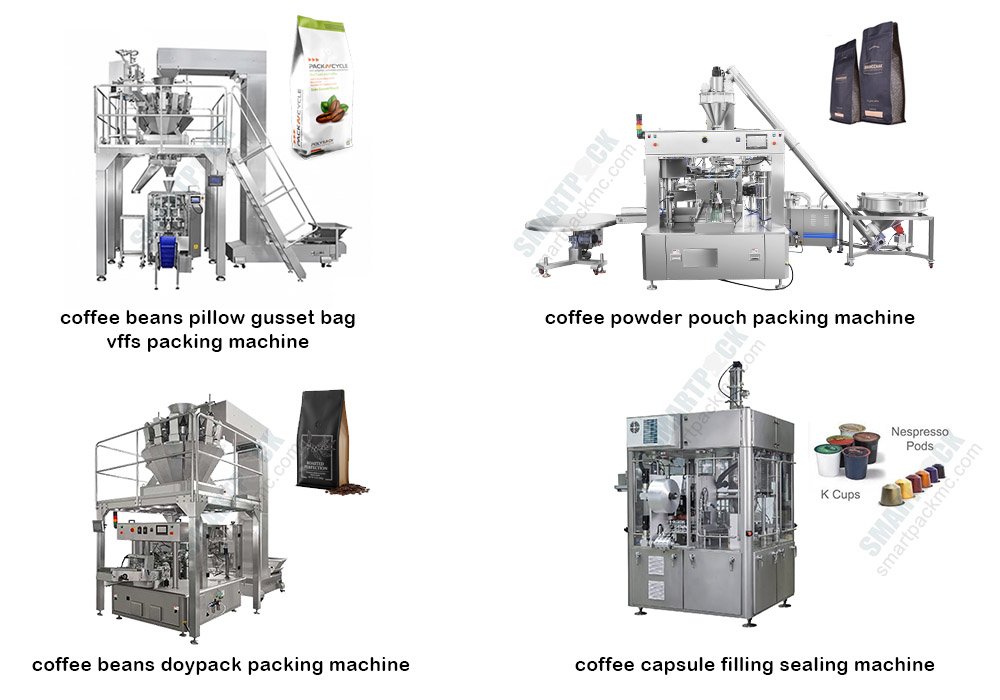
After helping over 1000 manufacturers worldwide choose their ideal packaging solutions, I've learned that the right approach saves both time and money. Let me walk you through the exact process we use at Smartpack to match our clients with their perfect packaging system.
What Production Requirements Should You Assess First?
Your current production needs create the foundation for every equipment decision. Many manufacturers skip this step and regret it later when their machine can't keep up.
Start by calculating your daily, weekly, and monthly output in both units and weight. Include seasonal peaks and realistic growth projections for the next 3-5 years to ensure your investment scales with your business.
I always tell my clients to be honest about their volume projections. Last year, I worked with a specialty roaster who initially claimed they needed a 15 bags-per-minute machine. After we analyzed their actual orders and growth plans, we recommended a 35 bags-per-minute system instead. Six months later, they called to thank us - they were already running at full capacity during peak seasons.
Your volume directly determines which machine category fits your needs. Entry-level systems handle 10-15 bags per minute and work well for craft roasters or start-ups. Mid-range machines achieve 30-45 bags per minute for established businesses. High-performance lines exceed 60 bags per minute for industrial operations.
Don't forget about product characteristics either. Whole beans need gentle handling to prevent breakage. Ground coffee creates dust that can interfere with sealing. Instant granules flow differently than regular grounds. Each product type requires specific feeding and dosing approaches. We design our multihead weighers specifically to handle these variations - the weighing heads adapt to different flow properties automatically.
Which Technical Features Matter Most for Coffee Packaging?
The weighing system determines both your accuracy and speed. Poor weighing leads to expensive product giveaway or unhappy customers receiving short-weight packages.
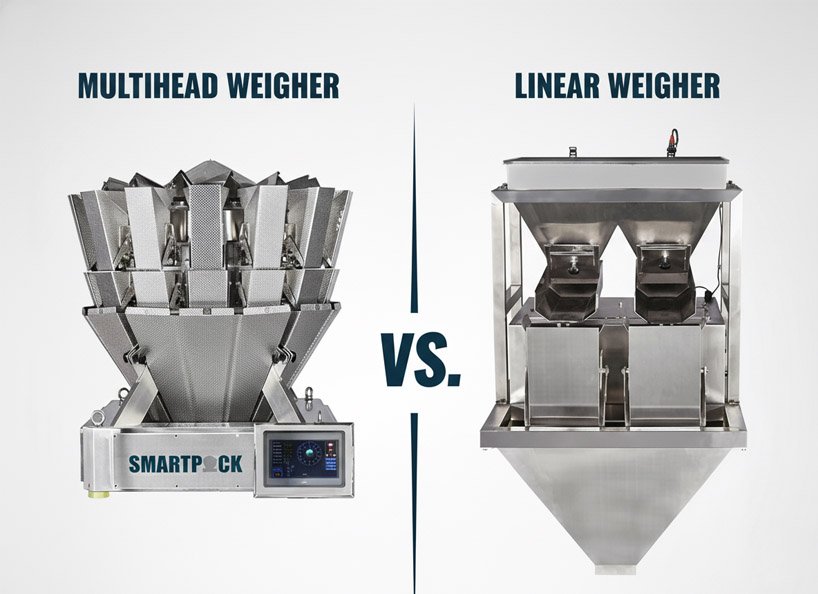
Multihead weighers offer the best combination of speed and accuracy for coffee packaging, achieving ±1.5 gram precision at up to 55 packs per minute. Linear weighers cost less but provide lower accuracy and slower speeds.
I remember visiting a client who was losing 3% of their product value to overweight packages using an old linear weigher. That's $30,000 per year on a million-dollar product run. We installed one of our 14-head multihead weighers, and within three months, they'd reduced giveaway to under 0.5%. The machine paid for itself in less than two years just from accuracy improvements.
For ground coffee, auger feeders control powder flow much better than gravity systems. The rotating auger screw moves product smoothly while minimizing dust generation. Our VFFS machines with auger feeders include dust extraction systems that keep your production area cleaner and prevent seal contamination.
Build quality matters more than most people realize. Coffee oils attack certain materials over time. Fine particles create abrasion on moving parts. We use SUS304 food-grade stainless steel for all product contact surfaces because it resists both chemical attack and wear. The initial cost is higher, but you avoid expensive repairs and replacements later. One client told me their previous machine's plastic components degraded within 18 months, requiring constant part replacements. Our stainless steel systems run for years without material degradation.
How Do You Calculate the True Cost of Ownership?
Purchase price represents only part of your total investment. Hidden costs often exceed the initial machine cost over its lifetime.
Calculate total cost of ownership by adding purchase price, installation, training, maintenance, energy, spare parts, and downtime costs. Include savings from reduced labor, improved accuracy, and increased throughput in your analysis.
I worked with a manufacturer who chose the lowest-priced machine from three quotes. Within six months, they were spending more on repairs and lost production than the price difference between their machine and our recommended solution. Poor reliability created constant disruptions. Low accuracy wasted product. Difficult operation required extra staff.
Energy consumption varies significantly between machines. Modern servo-driven systems use 30-40% less power than older pneumatic designs. On a machine running 16 hours daily, this saves thousands annually. Our latest VFFS lines include energy monitoring that shows exactly how much power each function uses, helping you optimize efficiency.
Maintenance costs depend heavily on design quality and local support availability. Machines with easily accessible components reduce service time and costs. Standard commercial parts cost less than proprietary alternatives. We design our systems using common industrial components wherever possible, so you're not locked into expensive specialty parts.
Don't overlook operator training costs. Complex controls create longer learning curves and more operating errors. Our touchscreen interfaces use intuitive icons and simple navigation. Most operators master basic functions within a few hours. Advanced features remain available for experienced users, but daily operation stays simple.
Conclusion
When selecting a coffee packing machine, it’s essential to align your production needs with the machine's technical capabilities while factoring in long-term ownership costs. Rather than focusing solely on the purchase price, take the time to assess the overall value and how the machine fits into your long-term strategy. For a deeper dive into the different options available, be sure to check out our next article on the types of coffee packaging machines.