

Single-serve coffee sales keep growing, but choosing the wrong capsule packaging machine can hurt your production efficiency before you start. Different formats need different equipment approaches.
Coffee capsule packaging requires either rotary machines (80-200+ capsules/minute, compact footprint) or linear machines (30-60 capsules/minute, simpler operation). Your choice depends on production volume, capsule format, and growth plans.

I've helped over 200 coffee brands enter the capsule market during my decade at Smartpack. The biggest mistake I see? Buying equipment before understanding format requirements and realistic production targets. Let me share what actually works.
What types of coffee capsule packaging machines should you consider?
Your machine choice shapes everything from production speed to product quality. Two main types dominate the market, each with distinct advantages.
Rotary capsule machines use circular carousels moving capsules through sequential stations, achieving 80-200+ capsules per minute. Linear machines process capsules in straight-line stations, typically producing 30-60 capsules per minute with simpler operation.
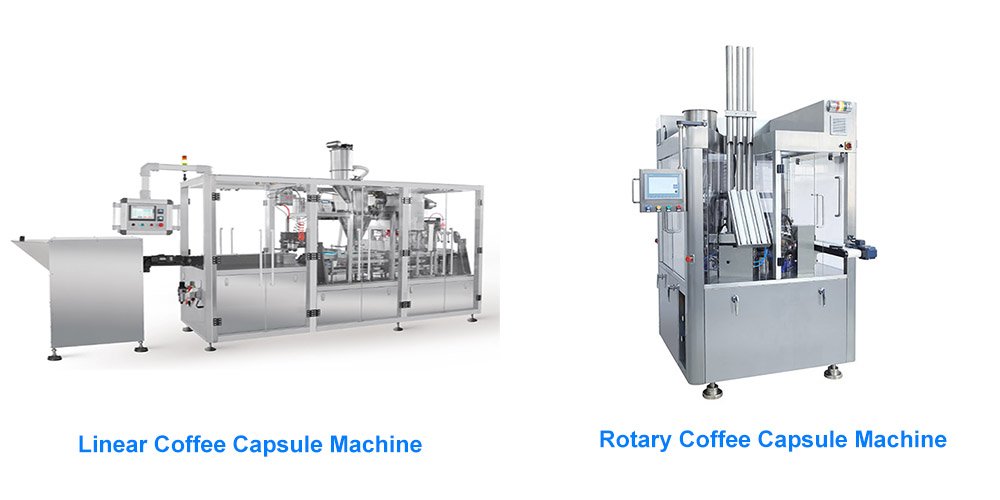
Rotary machines represent the industry standard for serious production. I've installed these systems in facilities across North America and Europe. The carousel design moves capsules through feeding, filling, lid placement, nitrogen flushing, sealing, and discharge stations in one continuous flow.
At Smartpack, our rotary coffee capsule machines demonstrate these design advantages:
| Specification | SP-KC01 | SP-KC03 |
|---|---|---|
| Capacity | 80 fills/minute | 210 fills/minute |
| Container Type | K cup/capsule | K cup/capsule |
| Filling Weight | 12g | 4-8g |
| Accuracy | ±0.2g | ±0.2g |
| Voltage | 220V, 50/60Hz, 3 phase | 220V, 50/60Hz, 3 phase |
| Machine Size | L1.8×W1.3×H2.0m | L1.8×W1.6×H2.6m |
Linear machines arrange stations sequentially. Capsules move from feeding to filling to sealing in a straight line. This simpler approach works well for smaller operations or businesses testing market demand before scaling up production.
The real difference comes down to production philosophy. Rotary machines excel at continuous, high-volume production with minimal operator intervention. Linear machines offer flexibility and easier operation but require more manual oversight.
| Machine Aspect | Rotary Advantages | Linear Advantages |
|---|---|---|
| Production Speed | 80-200+ capsules/minute | 30-60 capsules/minute |
| Complexity | Advanced automation features | Simpler operation |
| Floor Space | Compact circular footprint | Longer linear layout |
| Changeover Time | More complex setup | Faster product switches |
| Maintenance | Specialized technical knowledge | Easier troubleshooting |
Which capsule format delivers the best market opportunities?
Format choice affects machine selection, market access, and production efficiency. Three dominant formats control most market share globally.
K-Cups dominate North American markets with plastic construction and foil sealing. Nespresso-compatible aluminum capsules lead European markets. Each format requires specific machine capabilities and presents different business opportunities.
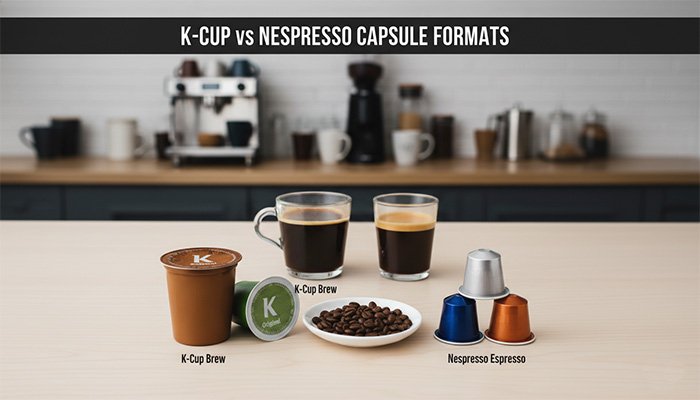
K-Cup format remains the North American standard. These plastic cups with foil lids accommodate various coffee types from light roasts to flavored blends. The Keurig brewing system punctures both top and bottom during extraction, requiring specific capsule strength characteristics.
I've seen many European companies struggle when entering K-Cup production. The plastic molding requirements, foil sealing parameters, and dimensional tolerances differ significantly from European capsule standards. Machine settings that work for one format often fail completely with another.
Nespresso-compatible capsules offer global market access but require aluminum construction expertise. The original line uses specific aluminum alloys and precise forming to achieve proper extraction pressure. Professional line capsules serve commercial markets with different dimensional requirements.
Format compatibility directly impacts your machine selection. Some equipment handles multiple formats with changeover tooling. Others lock you into single format production. I always recommend evaluating long-term format strategy before equipment purchase.
| Format Factor | K-Cup Benefits | Nespresso Benefits |
|---|---|---|
| Market Size | Largest North American share | Global premium market |
| Material Requirements | Plastic cup handling systems | Aluminum forming capability |
| Barrier Properties | Moderate oxygen protection | Excellent barrier performance |
| Machine Setup | Standard plastic sealing | Specialized aluminum sealing |
| Brewing Compatibility | Keurig system dominance | Multiple machine brands |
How do you calculate the right production capacity for your business?
Production planning determines equipment selection and operational success. Most new businesses underestimate realistic capacity needs while overestimating initial demand.
Calculate capacity based on realistic sales projections, not theoretical maximum demand. Start with monthly volume targets, add 20% buffer capacity, then select equipment matching sustained production requirements rather than peak theoretical output.
I've learned to ask tough questions during capacity planning. What's your realistic sales forecast for year one? How about year three? Can you actually sell 50,000 capsules monthly, or is that wishful thinking?
Low volume operations (under 30,000 capsules monthly) work well with linear machines. The equipment complexity matches operational needs. I've seen many startups choose overly complex rotary equipment for small volumes, then struggle with operational complexity that exceeds their technical capabilities.
Medium volume businesses (30,000-100,000 monthly) face the toughest decisions. Linear machines handle current demand but may constrain growth. Entry-level rotary machines provide expansion room but require more technical expertise.
High volume operations (100,000+ monthly) need rotary equipment. The operational efficiency and consistent output become essential. Manual processes simply can't sustain these volumes reliably.
Consider your production patterns too. Steady monthly production differs from seasonal spikes. Holiday demand might double your normal volumes for three months. Plan equipment capacity for sustained operation, not short-term peaks.
| Volume Level | Recommended Equipment | Key Considerations | Technical Requirements |
|---|---|---|---|
| Startup (0-30K/month) | Linear machine | Market testing phase | Basic operator training |
| Growth (30K-100K/month) | Linear or entry rotary | Expansion planning critical | Intermediate technical skills |
| Established (100K+/month) | Industrial rotary | Efficiency and reliability | Advanced maintenance capability |
What technical requirements affect capsule packaging equipment selection?
Equipment specifications extend beyond production capacity. Power requirements, facility modifications, and operational complexity significantly impact your production setup.
Capsule packaging machines require three-phase power, compressed air systems, proper ventilation, and skilled operators. Plan facility infrastructure, technical training, and maintenance capabilities before equipment selection.
Power requirements vary significantly between machine types. Linear machines often operate on single-phase power, making them suitable for smaller facilities. Rotary machines typically need three-phase 220V power with higher amperage ratings.
Compressed air systems represent critical infrastructure. Capsule machines use pneumatic systems for precise movements. A rotary machine might consume 15-20 CFM of compressed air continuously. Your facility needs adequate air compressor capacity and proper air treatment systems.
Operator training varies by machine complexity. Linear machines might need 2-3 days operator training for basic production. Complex rotary systems require 1-2 weeks including maintenance procedures and troubleshooting techniques.
Maintenance capabilities affect long-term success. Linear machines allow in-house maintenance for most issues. Rotary systems often require specialized technical support for complex problems. Consider your team's technical capabilities when selecting equipment.
Spare parts availability prevents production delays. Critical components like seal bars, auger flights, and timing belts should be readily available. Establish relationships with equipment suppliers for reliable parts support.
| Infrastructure Factor | Linear Machine | Rotary Machine | Planning Notes |
|---|---|---|---|
| Power Requirements | Single or three-phase | Three-phase required | Verify facility capability |
| Compressed Air | 8-12 CFM | 15-20 CFM | Size compressor system |
| Operator Training | 2-3 days | 1-2 weeks | Plan training schedule |
| Technical Support | Basic maintenance | Specialized expertise | Evaluate support options |
| Floor Space | 15-25 sq meters | 8-15 sq meters | Measure available area |
Conclusion
Choose linear machines for entry-level production under 50,000 capsules monthly with simpler operational requirements. Select rotary equipment for sustained high-volume operations exceeding 100,000 monthly capsules requiring maximum efficiency.