

Coffee powder creates dust, clogs seals, and flows inconsistently. These problems cost money through product waste and failed packages.
Auger dosing systems with seal cleaning features solve coffee powder packaging challenges. These machines deliver ±0.5-1% accuracy while preventing powder contamination of seal areas through specialized cleaning mechanisms.
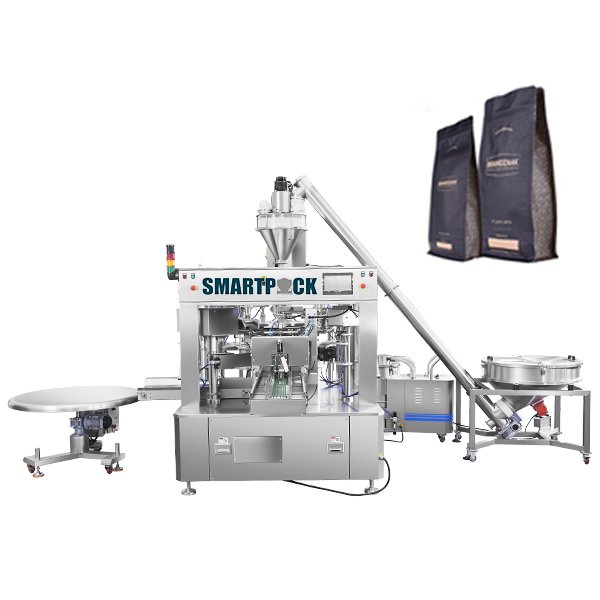
After helping hundreds of coffee manufacturers optimize their packaging lines, I've learned that treating powder like beans leads to disaster. The fine particles behave completely differently and require specialized approaches.
Why Does Coffee Powder Create Unique Packaging Challenges?
Coffee powder particles create problems that whole beans never cause. Dust flies everywhere and contaminates everything it touches.
Coffee powder has low density, variable flow properties, and generates dust that contaminates seal areas. These characteristics require specialized equipment designed specifically for fine particle handling rather than adapted bean packaging systems.
I've seen many manufacturers struggle with coffee powder because they underestimate its complexity. The particles range from fine flour consistency to coarser granules depending on grind settings. This variation creates multiple challenges simultaneously.
The low density means coffee powder takes up much more space than its weight suggests. Our hoppers need to be significantly larger compared to whole bean systems. A 500-gram fill might require three times the hopper volume of equivalent bean weight.
Flow properties change constantly based on roast level, origin, oil content, and humidity. Fresh roasted coffee flows differently than aged product. Dark roasts with higher oil content stick together more than light roasts. I've measured flow variations of 30% or more between different batches of the same blend.
The abrasive nature of fine particles creates maintenance challenges. Machine surfaces wear faster, requiring more frequent part replacement. We use specialized coatings and hardened materials in critical areas to extend service life.
Dust generation is the biggest issue. During filling, particles become airborne and settle on everything. This contamination affects seal quality, machine operation, and workplace cleanliness. Without proper dust control, production areas become unmanageable quickly.
Which Dosing Technology Works Best for Coffee Powder?
Multihead weighers work great for beans but fail with powder. Auger systems provide the precision and consistency that coffee powder demands.
Auger dosing systems deliver the best accuracy for coffee powder packaging, achieving ±0.5-1% precision through controlled screw rotation. Two-stage filling combines speed with accuracy by delivering 80% rapidly then adding remainder slowly.
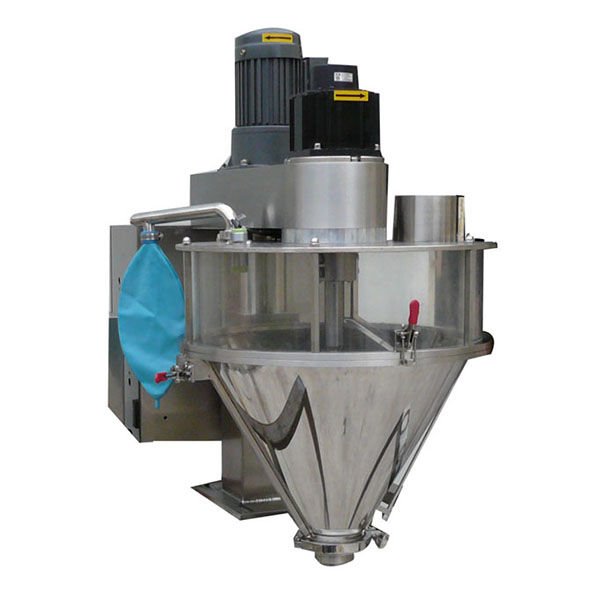
I recommend auger dosing for all coffee powder applications because it addresses the core challenges effectively. The rotating screw inside a dosing chamber measures and dispenses precise quantities regardless of flow variations.
The auger system works by rotating at controlled speeds to push coffee powder through the discharge outlet. We measure rotation precisely to dispense consistent volumes. For different fill weights, we adjust auger speed and rotation count accordingly. This direct mass-based control eliminates the volumetric measurement problems that plague other systems.
Two-stage filling represents a major advancement in auger technology. The first stage delivers approximately 80% of target weight rapidly to maintain production speed. The second stage adds the remainder slowly for precise final adjustment. This approach lets us achieve both speed and accuracy simultaneously.
| Dosing Method | Accuracy | Speed | Powder Suitability |
|---|---|---|---|
| Auger System | ±0.5-1% | High | Excellent |
| Cup Filler | ±2-3% | Medium | Poor |
| Multihead Weigher | ±0.1% | Very High | Not Suitable |
The compact design requirements make auger systems practical for existing production lines. They integrate easily with both premade pouch machines and VFFS systems. Dust generation stays controlled because product flows through enclosed pathways.
Volumetric cup fillers work for some applications but lack the accuracy premium coffee requires. They perform better with larger particles and consistent flow characteristics that coffee powder doesn't provide.
How Can You Achieve Clean Seals Without Powder Contamination?
Powder on seal surfaces destroys package integrity and accelerates staling. Specialized cleaning systems remove contaminants before sealing occurs.
Seal area cleaning systems using air knives, brushes, and vacuum extraction remove coffee powder from seal surfaces before package closure. Combined with proper nozzle design and timing coordination, these systems ensure reliable seals.
Seal contamination represents the biggest quality threat in coffee powder packaging. Even small amounts of powder on seal surfaces compromise heat seal strength and create leaks. I've tested packages with powder contamination and found seal strength reductions of 50% or more.
Modern powder packaging machines incorporate multiple seal area cleaning features. Air knives blow contaminants from seal surfaces using precisely directed air streams. The timing is critical - too early and powder settles back, too late and the seal has already formed. Brush systems physically remove powder residue through mechanical contact. These work well for stubborn particles that air alone cannot move.
Vacuum extraction pulls loose particles away from seal areas. This approach works particularly well when combined with air knives. The air loosens particles while vacuum removes them completely. Some machines use combination approaches with multiple cleaning methods working in sequence.
Specialized filling nozzles minimize product spillage during the fill cycle. We design these nozzles to maintain product flow within controlled pathways. This reduces dust generation and prevents product from reaching seal areas in the first place. Prevention is always better than cleanup.
Precise coordination between filling and sealing operations allows adequate settling time. This reduces the likelihood of particles reaching seal areas after filling completes. The timing must be optimized for each product and package combination.
Film selection also affects seal quality. Laminated films with proper heat seal layers provide reliable sealing when the seal layer is compatible with machine sealing temperature. Pouch design matters too - properly designed filling stations minimize product contact with seal areas through physical barriers or controlled flow paths.
What Machine Configuration Delivers the Best Results?
Different machine types require specific configurations for coffee powder success. The right setup prevents problems before they start.
Premade pouch machines need auger fillers, seal cleaning, and dust extraction. VFFS machines require powder-specific forming tubes, enhanced seal bar cleaning, and comprehensive dust collection for optimal coffee powder packaging performance.
Machine configuration makes the difference between success and failure with coffee powder. I've seen identical machines perform completely differently based on how they're configured for powder handling.
For premade pouch lines, auger filler integration is essential. The auger system must be properly sized for typical fill weights and powder characteristics. Undersized systems create bottlenecks while oversized systems waste space and increase dust generation. We calculate sizing based on target production rates, fill weights, and powder bulk density.
Seal protection features become critical with powder. I always recommend machines with proven seal area cleaning capabilities. During equipment evaluation, we test with actual product rather than relying on demonstrations with substitute materials. Coffee powder behaves uniquely and substitute materials don't reveal real-world performance.
Dust extraction protects both mechanisms and production environments. Adequate extraction requires proper sizing and positioning of collection points. We typically need 50% more extraction capacity for powder compared to whole beans. The extraction must be balanced to remove dust without disturbing product flow.
Weighing integration through closed-loop systems verifies fill weights and triggers automatic adjustments. This feedback system compensates for flow variations and maintains accuracy over long production runs. Without this integration, operators must manually monitor and adjust continuously.
VFFS machines need powder-specific modifications. Standard forming tubes accumulate powder in corners and crevices. Modified designs with smooth transitions and minimal ledges reduce buildup. Enhanced seal bar cleaning prevents accumulation that affects seal quality. We often add heated air systems to keep seal bars clean continuously.
Film registration becomes more critical with powder because any misalignment can put product in seal areas. Accurate registration ensures seals occur at proper positions relative to product fill. This requires better sensors and control systems than standard applications.
Conclusion
Auger dosing with seal cleaning solves coffee powder packaging challenges effectively, delivering accuracy and package integrity for premium products.