

You need a coffee capsule filling machine but can't decide between linear and rotary designs. Both promise high output and quality sealing, yet your choice will impact your production for years.
Linear machines use straight-line processing with multiple lanes for scalable output, while rotary machines use circular indexing for compact, flexible operation. Your choice depends on space constraints, changeover frequency, and long-term capacity goals.
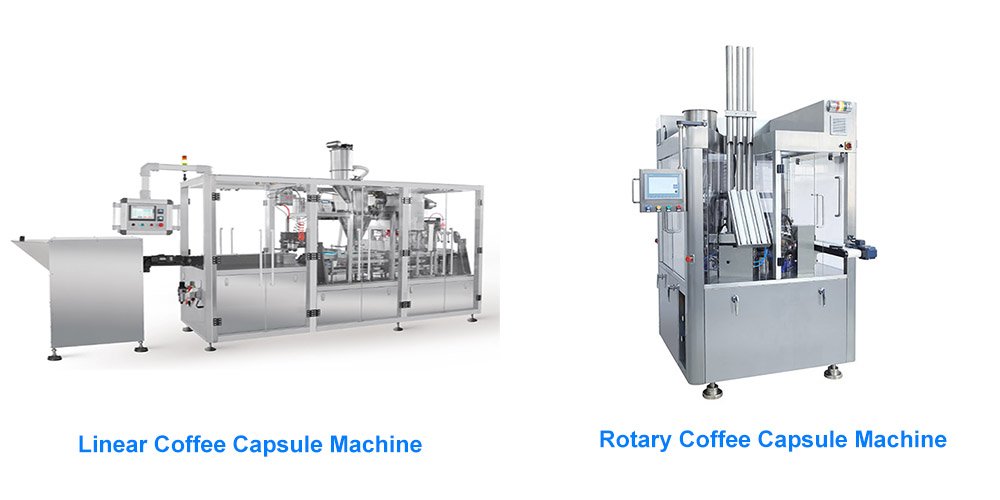
I've worked with hundreds of coffee capsule manufacturers over the past decade. The linear versus rotary decision often determines whether a production line succeeds or struggles. Let me share what I've learned from real installations across 50+ countries.
What makes linear and rotary coffee capsule machines different?
Your production layout shapes everything. Linear machines move capsules through stations in a straight line, while rotary machines use a circular table where capsules rotate through each process.
Linear machines arrange stations sequentially along a straight frame, allowing multiple parallel lanes. Rotary machines position all stations around a central rotating platform, creating a compact circular workflow.
The fundamental difference lies in how they handle production flow. I often tell clients that linear machines think like assembly lines - each lane operates independently. You can run 2, 4, 6, or even 8 lanes simultaneously. This means if one lane has issues, others keep running.
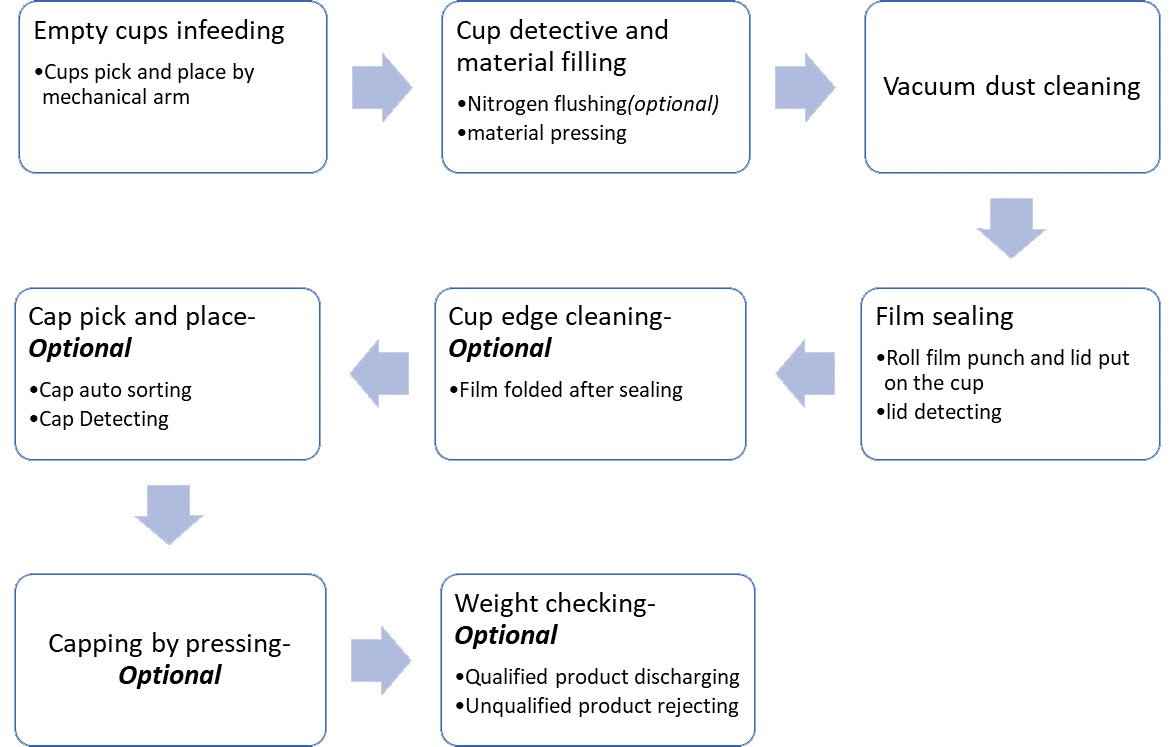
Rotary machines work differently. Every capsule follows the same circular path through feeding, filling, nitrogen flushing, sealing, and discharge stations. The timing must be precise because each station depends on the rotary table's movement.
| Machine Feature | Linear Type | Rotary Type |
|---|---|---|
| Production Flow | Straight-line, multi-lane | Circular, single path |
| Station Layout | Sequential along frame | Around central platform |
| Timing Control | Independent lane control | Synchronized rotary timing |
| Process Logic | Parallel processing | Sequential circular flow |
From my experience, linear machines excel when you need maximum flexibility in lane configuration. I've seen factories start with 4 lanes and expand to 12 lanes within two years. Rotary machines shine when you want everything contained in one compact footprint.
At Smartpack, our rotary coffee capsule machines demonstrate these design principles in action:
| Specification | SP-KC01 | SP-KC03 |
|---|---|---|
| Capacity | 80 fills/minute | 210 fills/minute |
| Container Type | K cup/capsule | K cup/capsule |
| Filling Weight | 12g | 4-8g |
| Accuracy | ±0.2g | ±0.2g |
| Voltage | 220V, 50/60Hz, 3 phase | 220V, 50/60Hz, 3 phase |
| Machine Size | L1.8×W1.3×H2.0m | L1.8×W1.6×H2.6m |
Both models showcase the compact footprint advantage of rotary design - delivering precise filling in less than 3 square meters of floor space.
Which machine design saves more factory space?
Factory space costs money, especially in urban areas. Rotary machines typically need 30-40% less floor space than equivalent linear systems.
Rotary coffee capsule machines require less factory space because all stations surround a central platform. Linear machines need longer installation areas, especially when adding multiple lanes for higher output.

Space planning becomes critical when you're retrofitting existing facilities. I remember one client in Germany who had a narrow production hall. The linear machine we initially proposed wouldn't fit without major renovations. We switched to a rotary design and saved them €200,000 in facility modifications.
The math is straightforward. A 6-lane linear machine might need 15 meters of length plus surrounding maintenance space. That same output from a rotary machine typically fits in a 6x8 meter area.
But space isn't just about footprint. Think about operator access, maintenance clearance, and material flow. Linear machines spread these requirements along the entire length. Rotary machines concentrate everything around the central platform.
| Space Factor | Linear Advantage | Rotary Advantage |
|---|---|---|
| Floor Area | Higher capacity per square meter when maxed | Much smaller total footprint |
| Maintenance Access | Easier station-by-station access | Concentrated maintenance area |
| Material Flow | Multiple feed points possible | Single feed/discharge point |
| Future Expansion | Can extend with more lanes | Limited to rotary table capacity |
I always ask clients about their 5-year space plans. If you're planning facility expansion anyway, linear might be smart. If space is fixed, rotary often wins.
How do changeover times compare between these machines?
Changeover time directly impacts your profitability. Every minute spent changing formats is lost production time.
Rotary machines typically achieve faster changeovers because fewer tooling positions need adjustment. Linear machines require format changes across multiple lanes, increasing changeover complexity and time.
I've timed hundreds of changeovers across both machine types. A typical rotary machine changeover takes 45-90 minutes for capsule format changes. Linear machines often need 2-4 hours because each lane requires individual adjustment.
The difference comes down to tooling multiplication. Change one rotary table setup versus changing 6 individual lane setups. The math speaks for itself.
However, linear machines offer one advantage - partial changeover capability. You can switch some lanes to a new format while others finish the current batch. This staged changeover approach works well for facilities running multiple products simultaneously.
Changeover complexity also depends on format differences. Switching from Nespresso-compatible to K-Cup formats requires different tooling, filling systems, and sealing parameters. Rotary machines handle these major changes more efficiently because everything connects to one central control system.
| Changeover Aspect | Linear Machine | Rotary Machine |
|---|---|---|
| Time Required | 2-4 hours typically | 45-90 minutes typically |
| Tooling Points | Multiple per lane | Single rotary set |
| Partial Changeover | Possible lane by lane | All or nothing |
| Operator Skill | Higher complexity | Moderate complexity |
| Format Flexibility | Better for similar sizes | Better for different formats |
My recommendation? If you change formats weekly or daily, rotary makes sense. If you run long campaigns with infrequent changes, linear efficiency matters more.
Which machine type delivers higher production output?
Production speed means nothing without context. Both machine types can achieve high output, but they scale differently.
Linear machines achieve higher total output through multiple parallel lanes, often reaching 1000+ capsules per minute. Rotary machines typically max out at 200-400 capsules per minute but offer consistent, reliable production rates.
Output scaling works differently for each design. Rotary machines increase speed by optimizing rotary table timing and station efficiency. There's a practical limit based on capsule handling and sealing requirements.
Linear machines scale by adding lanes. Start with 4 lanes at 150 capsules per minute each - that's 600 total. Need more capacity? Add 2 more lanes for 900 per minute. This modular approach lets you match investment to demand growth.
But raw speed isn't everything. I've seen linear machines achieve 1200 capsules per minute on paper but struggle with line balancing issues. If one lane stops, efficiency drops immediately. Rotary machines might run at 300 per minute but maintain that rate consistently.
Consider your production patterns too. Constant high-volume production favors linear designs. Variable demand with frequent product switches favors rotary reliability.
| Output Factor | Linear Advantage | Rotary Advantage |
|---|---|---|
| Maximum Speed | 1000+ capsules/min possible | 70-210 capsules/min typical |
| Scaling Method | Add more lanes | Optimize rotary timing |
| Consistency | Depends on line balance | Very consistent rates |
| Efficiency | Higher peak output | Better sustained output |
| Investment Scaling | Modular lane addition | Single machine optimization |
Real-world output also depends on your specific capsule format, fill weight accuracy requirements, and nitrogen flushing needs. I always recommend production trials before finalizing capacity calculations.
Conclusion
Choose linear machines for maximum scalability and high-volume production. Choose rotary machines for space efficiency, quick changeovers, and consistent operation.