

Small roasteries struggle with equipment choices daily. Limited budgets meet high-quality demands. Picking wrong packaging equipment costs thousands in lost efficiency.
For small to medium roasteries, multihead weigher systems with premade pouch capability offer the best balance of accuracy, speed, and flexibility, typically delivering ROI within 18-24 months through reduced giveaway and labor savings.
I've worked with hundreds of roasteries over the past decade. The same questions come up every time. Which equipment fits my space? How much accuracy do I really need? Should I start small or invest big from day one? Let me share what I've learned from these partnerships.
What Makes Coffee Packaging Different for Small Roasteries?
Coffee roasters face unique challenges. Space costs money in urban areas. Product variety demands flexibility. Quality expectations stay high regardless of scale.
Small roasteries need packaging equipment that handles 100-5000 bags daily across multiple SKUs while maintaining professional quality and fitting tight spaces with limited technical support.
Most small roasteries operate differently than large manufacturers. I see this pattern repeatedly across our customer base. Production volumes range from hundreds to several thousand bags daily. Space constraints dominate equipment decisions in urban facilities.
Key Operational Characteristics
Product diversity creates the biggest challenge. One roastery I work with packages twelve different origins in five bag sizes. They switch between 250g retail bags and 5kg wholesale formats throughout the day. Traditional industrial equipment can't handle this flexibility.
Staffing patterns also differ significantly. Small teams handle multiple responsibilities. The person running packaging might also manage shipping and customer service. Equipment complexity must match operator availability and expertise.
Budget limitations shape every decision. I've seen promising roasteries fail because they chose equipment that looked impressive but drained cash flow. Smart equipment investments support growth instead of limiting it.
| Challenge | Impact | Solution Focus |
|---|---|---|
| Limited Space | Restricts equipment size | Compact footprint designs |
| Product Variety | Requires flexibility | Quick changeover capabilities |
| Budget Constraints | Limits initial investment | Phased upgrade paths |
| Multi-tasking Staff | Needs simple operation | Intuitive controls and automation |
Quality expectations never decrease with company size. Customers expect professional packaging whether you're roasting fifty bags or five thousand. Your equipment must deliver consistent results without requiring packaging expertise.
Which Weighing Technology Delivers the Best ROI for Growing Operations?
Weighing accuracy directly impacts profitability. Poor accuracy means giving away product. Excellent accuracy means higher profits and professional presentation.
Multihead weighers typically reduce giveaway by 2-3% compared to linear systems, generating $50,000-100,000 annual savings for roasteries producing 2,000+ bags daily while improving speed and consistency.
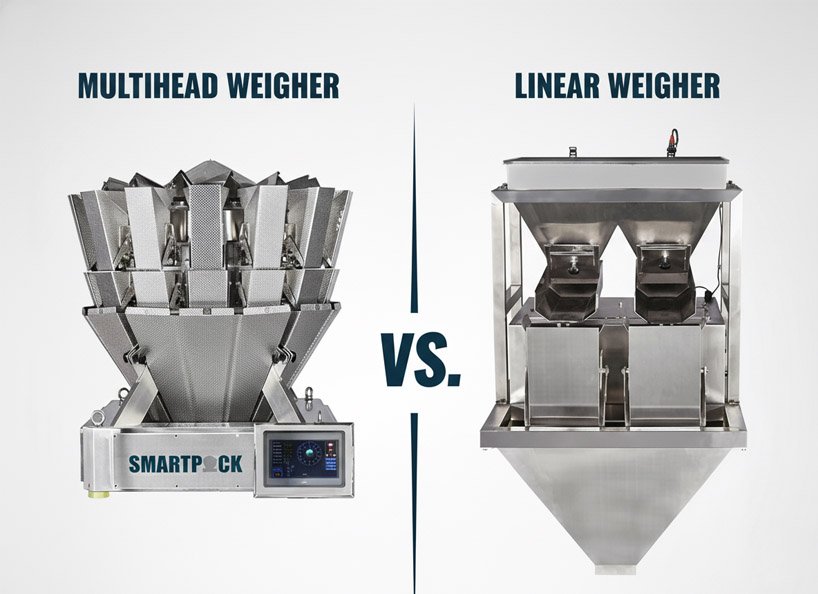
I track ROI data from our installations carefully. The numbers tell a clear story about weighing technology value. Linear weighers work for startups but become limiting factors as production grows.
Linear Weigher Performance
Entry-level linear systems serve beginning operations well. Speeds reach 10-15 bags per minute with accuracy around ±3 grams. Simple operation reduces training requirements. Compact designs fit small spaces.
However, limitations become apparent quickly. I recently helped a roastery upgrade from linear to multihead weighers after eighteen months. Their 3-gram giveaway was costing $180 daily in product waste. Over a year, that's $65,000 in unnecessary costs.
Multihead Weigher Advantages
Our 14-head multihead weighers deliver ±1-1.5 gram accuracy consistently. Speeds reach 30-45 bags per minute depending on product and bag size. The investment pays back through reduced giveaway alone in most cases.
One customer calculated exact savings after six months of operation. Their previous linear weigher averaged 2.5% overfill. The multihead weigher reduced this to 0.5%. At 3,000 bags daily with 500g average weight and $12/kg product cost, they saved $270 daily - nearly $100,000 annually.
| Weigher Type | Speed (bags/min) | Accuracy | Best Application |
|---|---|---|---|
| Linear | 10-15 | ±3g | Startup operations |
| 10-Head Multihead | 25-35 | ±1.5g | Growing roasteries |
| 14-Head Multihead | 30-45 | ±1g | Established operations |
Speed improvements create additional value. Faster packaging reduces labor costs and enables taking on larger orders. The same operator can package significantly more product in the same shift.
Should You Choose Premade Pouches or VFFS for Coffee Packaging?
Package format decisions affect flexibility and costs. Premade pouches offer variety but cost more per unit. VFFS systems reduce material costs but limit flexibility.
For most small roasteries, premade pouch systems provide better value through flexibility and professional appearance, despite higher material costs, because quick changeovers and premium presentation justify the investment.
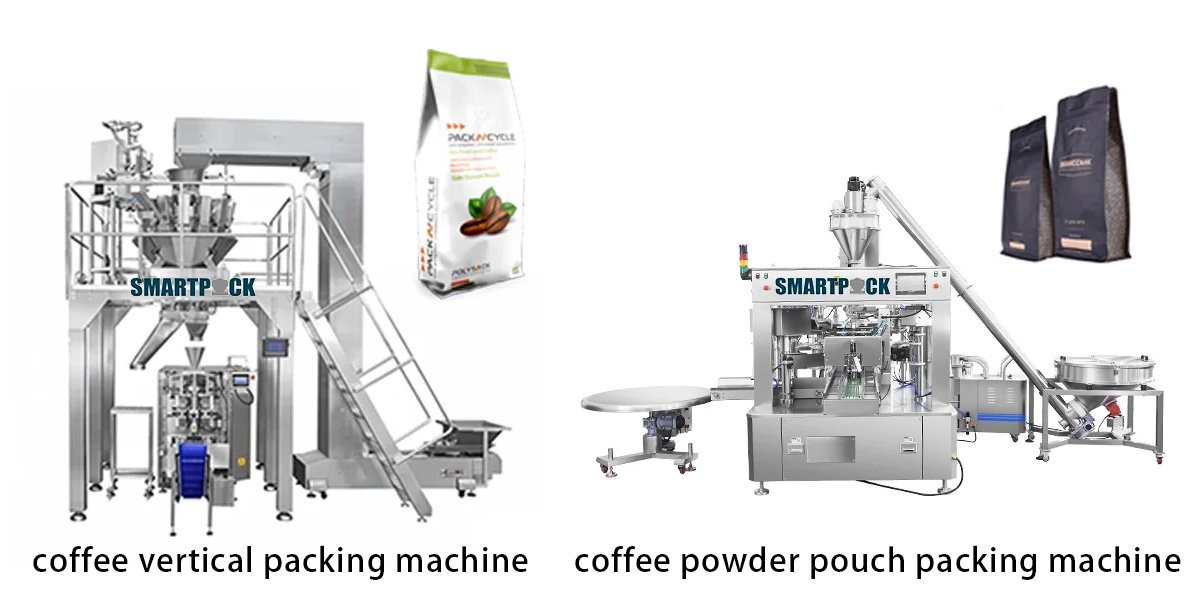
This decision shapes daily operations significantly. I help roasteries evaluate both options based on their specific production patterns and market requirements.
Premade Pouch Benefits
Flexibility drives most decisions toward premade pouches. Changing between flat pouches, stand-up formats, and zipper styles takes minutes instead of hours. One roastery switches between six pouch styles daily based on orders. VFFS couldn't support this variety economically.
Professional appearance matters enormously in specialty coffee. Premium pouches with high-quality printing command higher retail prices. Stand-up pouches dominate retail displays and improve shelf presence dramatically.
Valve integration simplifies freshness preservation. Pre-installed one-way valves eliminate additional equipment and labor. Whole bean products maintain freshness without manual valve insertion.
VFFS Considerations
Material costs favor VFFS for consistent production. Film typically costs 20-30% less than equivalent premade pouches. High-volume production amplifies these savings significantly.
Speed advantages emerge with focused product lines. VFFS systems handle 50+ bags per minute efficiently when running consistent formats. Continuous bag formation eliminates pouch loading time.
However, changeover complexity limits flexibility. Switching film types or bag dimensions requires 30-60 minutes typically. This works for long production runs but penalizes variety-focused operations.
| Factor | Premade Pouches | VFFS |
|---|---|---|
| Flexibility | Excellent | Limited |
| Material Cost | Higher | Lower |
| Changeover Time | 2-5 minutes | 30-60 minutes |
| Appearance Options | Extensive | Limited |
| Technical Requirements | Lower | Higher |
Most small roasteries benefit from starting with premade pouch systems. As production volumes increase and product lines stabilize, VFFS becomes more attractive for specific applications.
How Do You Calculate the True Cost of Coffee Packaging Equipment?
Purchase price represents only part of total ownership costs. Operating expenses, maintenance, and opportunity costs significantly impact long-term value.
Total cost of ownership includes equipment price, installation, training, maintenance, consumables, and lost production from downtime, typically running 150-200% of initial purchase price over five years.
I work with roasteries to develop complete financial models before equipment decisions. Hidden costs surprise many buyers and affect profitability significantly.
Direct Cost Components
Purchase price gets attention but installation costs add 10-20% typically. Electrical work, compressed air systems, and facility modifications accumulate quickly. Budget these expenses from the start.
Training investment pays dividends long-term. Proper operator training reduces maintenance issues and maximizes equipment performance. Plan for 2-3 days of intensive training plus ongoing support.
Maintenance costs vary dramatically between manufacturers. Quality equipment requires less frequent service but parts cost more when needed. Evaluate supplier support capabilities carefully before purchasing.
Indirect Cost Factors
Downtime costs exceed maintenance expenses in most cases. Each hour of unplanned downtime represents lost production and potential customer disappointment. Reliable equipment and responsive support minimize these risks.
Accuracy improvements generate ongoing value. Better weighing accuracy reduces product giveaway continuously. This creates compounding savings over equipment lifetime.
Labor efficiency gains often justify equipment investments alone. Automated systems reduce packaging labor requirements significantly while improving consistency and speed.
| Cost Category | Percentage of Purchase Price | Annual Impact |
|---|---|---|
| Installation | 10-20% | One-time |
| Training | 2-5% | One-time |
| Maintenance | 3-8% | Annual |
| Consumables | 5-15% | Annual |
| Downtime | 2-10% | Variable |
Energy consumption matters for high-speed equipment. Modern systems use less power but calculate operating costs over equipment lifetime. Energy-efficient designs reduce environmental impact and operating expenses.
Quality improvements through better equipment often enable premium pricing. Professional packaging supports brand positioning and customer perception. These benefits compound over time and justify higher equipment investments.
Conclusion
The right packaging equipment transforms small roastery operations by reducing costs, improving quality, and enabling growth while matching specific production requirements and budget constraints.