

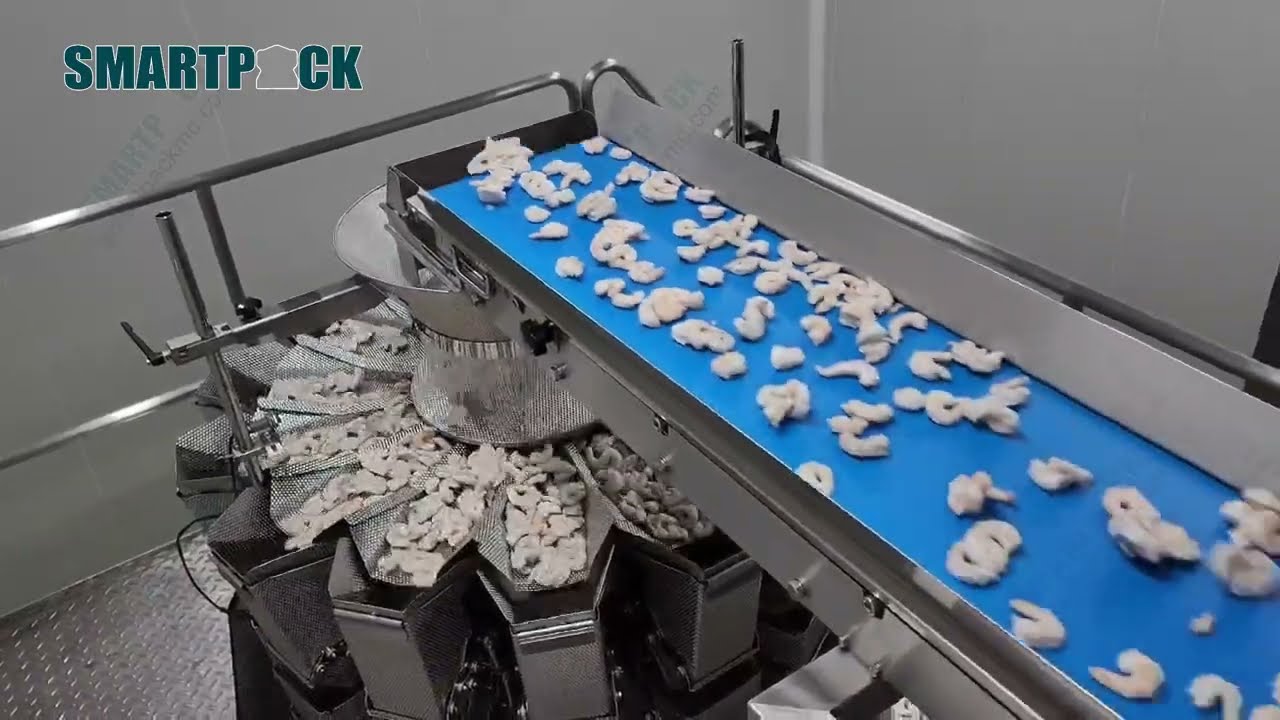
Many frozen seafood factories face their biggest packaging challenge after pouches leave the packing machine. Manual carton loading becomes the slowest step.
Robotic carton loading systems can eliminate this bottleneck by automating secondary packaging. Our recent frozen shrimp project increased carton loading speed by 300% while reducing manual labor requirements significantly.
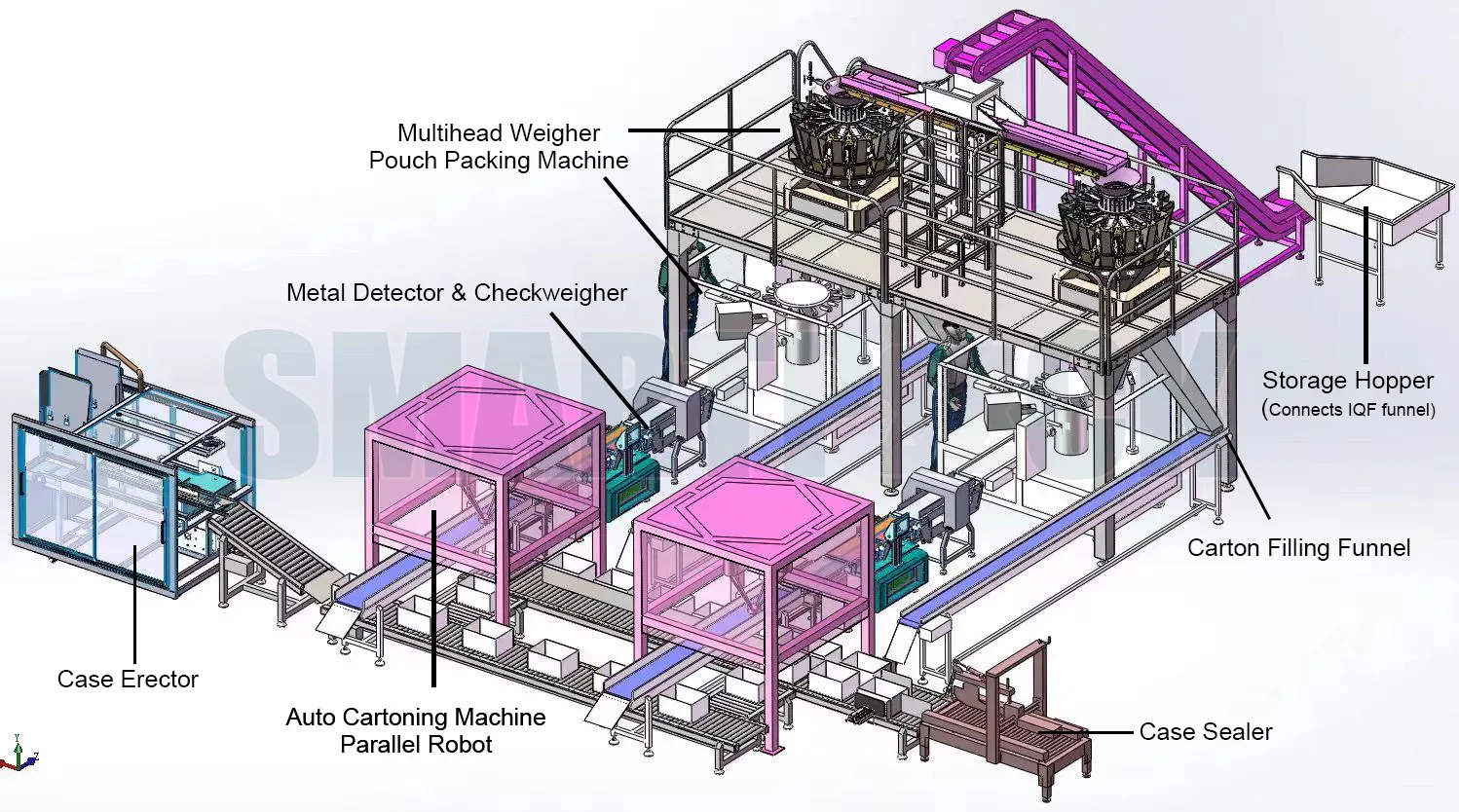
| Drawing |
|---|
 |
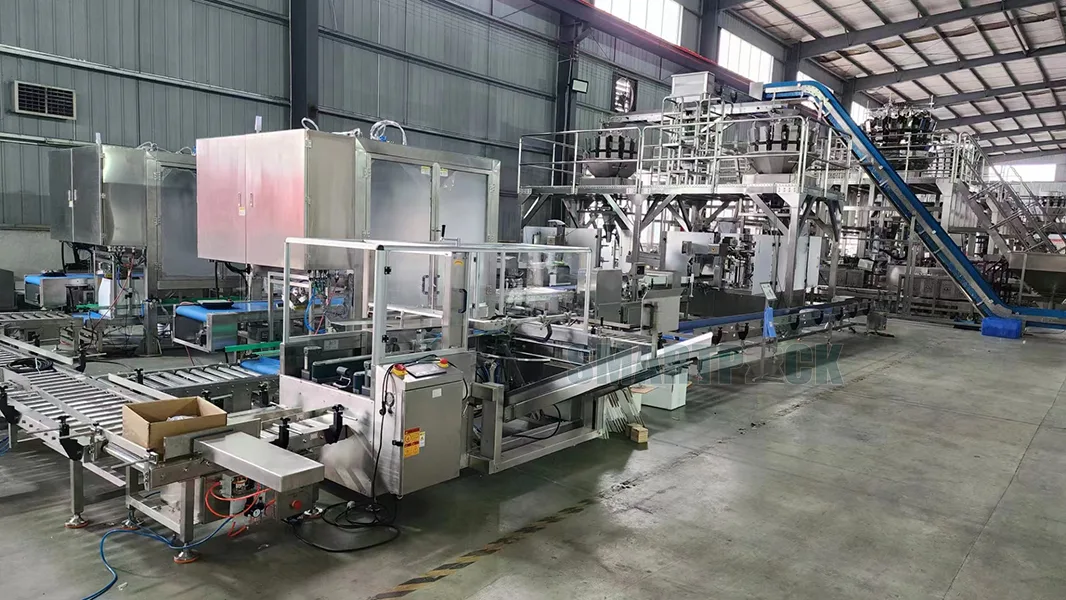
| Actual Machine |
|---|
 |
I have seen this problem in countless frozen seafood plants. The weighing works fine. The pouch packing runs smoothly. Then everything slows down when workers try to keep up with carton loading manually.
Why Does Frozen Seafood Packaging Create Unique Automation Challenges?
Frozen products bring problems that dry foods never create. Workers struggle in cold environments while handling wet, slippery packages all day.
Frozen seafood packaging requires specialized automation because products are wet, sticky, and processed in cold environments. Standard packaging equipment often fails under these harsh conditions.
Temperature and Product Handling Issues
We recently worked with an IQF shrimp processor facing exactly these issues. Their workers were struggling to maintain consistent speeds in the freezing environment. The shrimp pouches became slippery after sealing, making manual handling even more difficult.
Cold environments create several specific problems that I have observed across multiple installations. Workers move slower in protective gear. They take more breaks to warm up. Product handling becomes less precise when wearing thick gloves.
The sticky nature of frozen seafood also creates problems. Products often freeze to surfaces or stick together. This makes automated handling more complex than standard dry food packaging. We had to design special conveyor surfaces and product guides to handle the frozen shrimp smoothly.
| Challenge | Impact on Production | Our Solution |
|---|---|---|
| Cold working environment | Slower worker speed, frequent breaks | Robotic systems reduce human exposure |
| Slippery products | Handling difficulties, safety risks | Specialized gripping and conveyor systems |
| Product sticking | Jamming, inconsistent flow | Custom product guides and release systems |
| Labor shortages | Production delays, higher costs | Automated carton loading and palletizing |
The key insight from this project was that frozen food automation needs different engineering approaches. Standard packaging equipment often struggles with the moisture, temperature changes, and product characteristics we encounter in frozen seafood processing.
How Does Robotic Carton Loading Solve the End-of-Line Bottleneck?
Most frozen seafood plants automate primary packaging but still use manual labor for carton loading. This creates an obvious speed mismatch between sections.
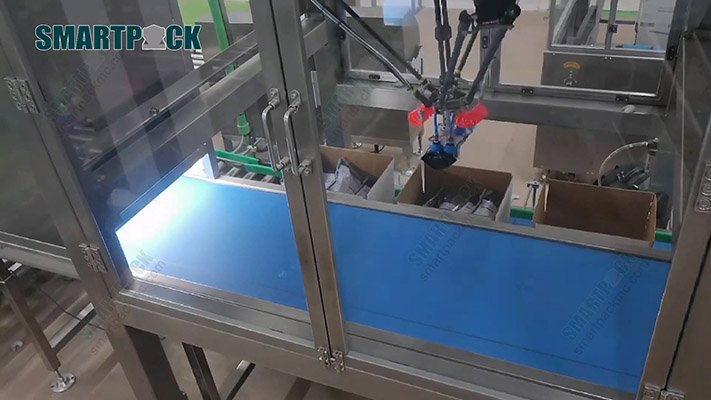
Robotic carton loading systems can handle 25-30 cartons per minute consistently, matching or exceeding primary packaging speeds while eliminating the manual labor bottleneck completely.
System Integration and Performance Results
The frozen shrimp project I mentioned earlier demonstrates exactly how this works. We integrated their existing premade pouch packing machines with our robotic carton loading system. The results were immediate and dramatic.
Before automation, their workers could load about 8-12 cartons per minute manually. The speed varied significantly based on the shift, worker experience, and how long they had been working. During peak production, pouches would accumulate at the end of the line, forcing the entire system to slow down.
Our robotic system consistently handles 25 cartons per minute without variation. The robot detects pouch positions automatically, organizes orientation, and loads cartons with perfect consistency. More importantly, it maintains this speed throughout the entire shift without breaks or slowdowns.
| Performance Metric | Manual Loading | Robotic Loading | Improvement |
|---|---|---|---|
| Average speed | 8-12 cartons/min | 25 cartons/min | 150-200% faster |
| Consistency | Variable by shift | Constant | 100% reliable |
| Labor required | 3-4 workers | 1 operator | 75% reduction |
| Quality consistency | Variable | Perfect | Eliminates human error |
The synchronization between primary and secondary packaging became seamless. We connected the entire line through our centralized control system. When pouch output increases, carton loading speeds up automatically. When maintenance stops primary packaging, secondary packaging stops immediately without waste.
What Production Results Can You Expect From Complete Automation?
Many factory owners worry about automation costs versus actual production improvements. Our frozen seafood projects show measurable results across multiple areas.
Complete frozen seafood packaging automation typically increases overall line efficiency by 40-60% while reducing labor costs by 70-80% in the secondary packaging area.
Real Production Numbers and ROI Analysis
The frozen shrimp processor I worked with achieved remarkable improvements within the first three months. Their production data shows exactly what modern automation can accomplish in frozen food environments.
Before automation, they were producing about 180 finished cartons per hour during good shifts. Poor shifts dropped to 120-140 cartons per hour due to worker fatigue, breaks, and handling difficulties. The variation made production planning extremely difficult.
After installing our complete automation system, they consistently produce 300+ cartons per hour regardless of shift length or external factors. The improvement came from eliminating manual bottlenecks and synchronizing the entire packaging flow.
Labor cost reduction was even more significant than speed improvements. They reduced secondary packaging staff from 6 workers per shift to 2 operators. The remaining operators focus on quality control and system monitoring rather than repetitive manual tasks.
| Result Area | Before Automation | After Automation | Improvement |
|---|---|---|---|
| Hourly output | 120-180 cartons | 300+ cartons | 65-150% increase |
| Labor required | 6 workers/shift | 2 operators/shift | 67% reduction |
| Consistency | High variation | Stable performance | Predictable production |
| Quality control | Manual inspection | Automated verification | Better accuracy |
The most valuable result was production predictability. They can now commit to delivery schedules with confidence because their packaging line performs consistently every day. This reliability has helped them secure larger contracts and expand into new markets.
Conclusion
Frozen seafood packaging automation eliminates manual bottlenecks while delivering consistent, measurable production improvements that justify investment costs quickly.