

A reliable canned pet food line should be designed around the product condition, target weight, can dimensions and downstream process—not simply the maximum speed of the can seamer.
Tuna flakes, sticky meat chunks, chunks in gravy and smooth pâté behave differently during feeding and filling. Using the wrong system can cause unstable portions, excessive product residue, inconsistent solid-to-liquid ratios or a bottleneck before the seamer.
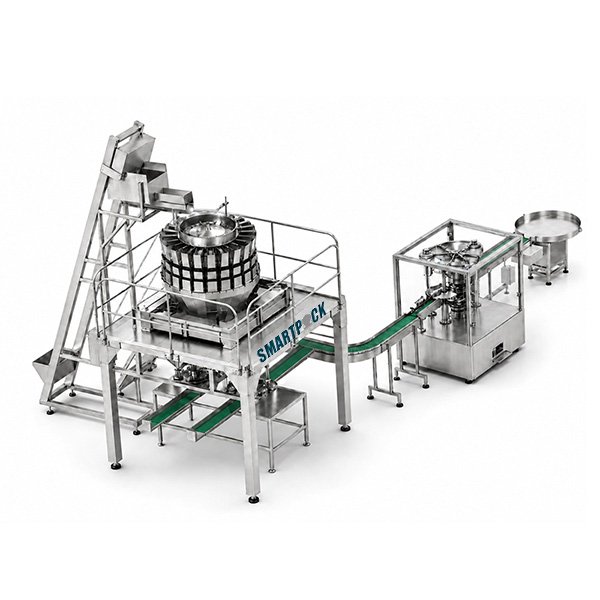
For one tuna flakes project, SmartPack configured a screw multihead weigher, four-can distributor, empty-can feeding machine, can sealing machine and side labeling machine. The line was designed for 100–300 g portions in cans measuring 100 mm in diameter and 80 mm in height.
This article explains the engineering decisions behind this type of canned pet food filling and seaming line.
Start With the Product Condition
“Wet pet food” is too broad for equipment selection. The right filling system depends on whether the product consists of separate pieces, sticky flakes, solids mixed with gravy or a homogeneous paste.
| Pet Food Condition | Main Filling Challenge | Suitable Filling System |
|---|---|---|
| Tuna or fish flakes | Irregular pieces accumulate and feed inconsistently | Screw multihead weigher |
| Sticky meat chunks | Pieces stick together and resist vibration feeding | Screw multihead weigher |
| Chunks with gravy | Solid weight and liquid ratio must be controlled separately | Screw multihead weigher plus gravy filler |
| Loaf, mousse or pâté | Product has few separate pieces and flows as one mass | Piston or vacuum filler |
| Mainly liquid pet food | Flow rate determines the portion | Pump or flow-meter filler |
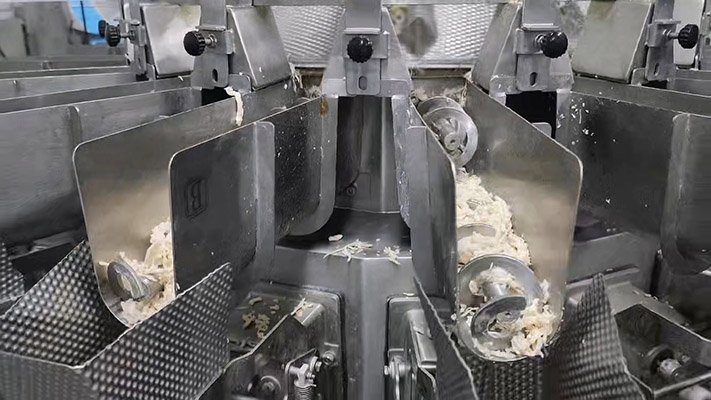
A standard vibration-fed multihead weigher works well for free-flowing dry products but may struggle to move wet tuna flakes consistently. Product can remain on the feeding trays, form uneven clumps or enter the weigh hoppers at an unstable rate.
A screw multihead weigher replaces passive vibration feeding with rotating screws that actively move the product toward the weigh hoppers. Screw speed can be adjusted according to the moisture, stickiness and piece size of the tuna flakes.
However, this does not mean every canned pet food project needs a screw weigher. Smooth mousse or homogeneous liquid food may be better handled by a piston, pump or vacuum filler. The product—not the package—should determine the dosing technology.
A Practical Tuna Flakes Can Filling Configuration
The confirmed project requirements were:
| Project Item | Confirmed Requirement |
|---|---|
| Product | Tuna flakes |
| Target weight | 100–300 g |
| Can diameter | 100 mm |
| Can height | 80 mm |
| Weighing system | Screw multihead weigher |
| Filling configuration | Four-can distributor |
| Upstream equipment | Empty-can feeding machine |
| Sealing equipment | Can sealing machine |
| Downstream equipment | Side labeling machine |
The main packaging flow is:
Empty-can feeding → can positioning → screw multihead weighing → four-can filling → lid placement and can sealing → downstream processing → side labeling
The empty-can feeding machine supplies and spaces the cans before they enter the filling station. Correct spacing is important because all four cans must reach their filling positions before the distributor releases the weighed portions.
The screw multihead weigher prepares the required tuna portions, after which the distributor guides the product into four cans during the same filling cycle. This multi-can design helps the weighing system serve several containers without requiring one independent weigher for every can lane.
SmartPack can also engineer a six-can distributor for higher-output projects. However, increasing the number of filling positions only works when the weigher, empty-can feeder, distributor, seamer and conveyors all have sufficient capacity. Adding two more can outlets to an unbalanced line will not automatically increase stable production.
If the tuna recipe includes separately added sauce, oil or gravy, an additional liquid dosing unit may be installed after the solid filling station. Solid and liquid dosing should be controlled independently so the factory can adjust the tuna-to-liquid ratio without changing the entire filling program.
This configuration is naturally connected to the SmartPack canned wet pet food filling and sealing line.
Balance the Complete Line, Not One Machine
The actual output of a canned pet food line is determined by its slowest process. A high-speed seamer cannot reach its rated capacity if the tuna flakes take longer to feed, weigh or discharge.
Real output can be affected by:
- Tuna flake size, temperature and stickiness
- Target weight between 100 and 300 g
- Product supply to the screw weigher
- Weighing and combination time
- Four-can positioning accuracy
- Product discharge time
- Lid feeding stability
- Can-sealing cycle
- Downstream can accumulation
The 100 g and 300 g formats should not automatically be assigned the same production speed. A heavier portion requires more product to enter and leave the hoppers, while larger or more tangled flakes may need additional discharge time.
The can feeder must deliver four correctly spaced cans before every discharge. If one can is missing or incorrectly positioned, the control system should stop the filling signal rather than release product into an empty position.
The seamer must then accept each group without creating congestion. A short buffer conveyor can absorb minor speed variation, but it cannot solve a permanent mismatch between the filler and seamer.
Ask for the tested line speed using the actual tuna flakes, target weight and 100 × 80 mm can—not only the maximum mechanical speed of the seamer.
A publishable test result should identify the product, target weight, number of cans filled per cycle, continuous running period and recorded output. Until those conditions have been documented, SmartPack should describe the equipment configuration without making an unsupported speed or accuracy claim.
Coordinate Sealing, Retort Processing and Labeling
The specified 100 mm diameter and 80 mm height affect more than the filling volume. They determine the conveyor guides, can positioning structure, distributor spacing, lid feeder and seamer tooling.
If the factory later introduces a different can diameter, changing only the filling target will not be sufficient. Format parts may also need to be adjusted or replaced. Factories planning several can sizes should therefore evaluate changeover requirements before the line layout is finalized.
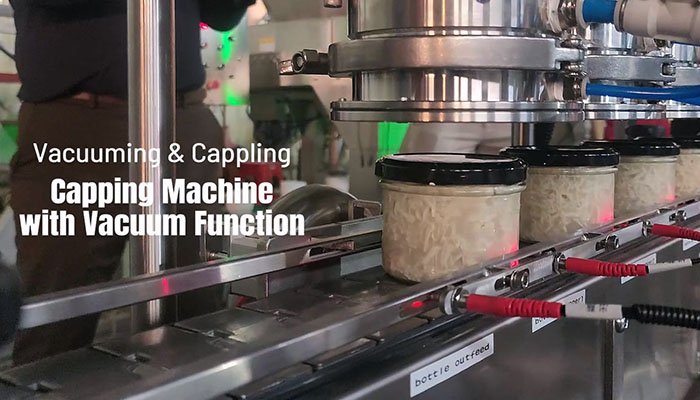
After filling, the can rim must remain sufficiently clean for lid placement and seaming. Tuna flakes, oil or gravy on the rim can interfere with stable can handling. The distributor shape, discharge timing and distance between the outlet and can opening should be optimized to reduce material falling outside the container.
Wet pet food is commonly thermally processed after the container has been hermetically sealed. The European Pet Food Industry Federation explains that wet pet food ingredients are cooked within sealed cans, trays or pouches to create a stable product until the package is opened. See FEDIAF’s wet pet food production overview.
The equipment supplier can provide the filling, seaming and conveying interface, but the retort schedule must be established by a qualified thermal-processing specialist based on the recipe, container and applicable market requirements.
Can handling after seaming should minimize drops, impacts and pressure on the seam area. FDA technical guidance for low-acid canned foods also highlights the importance of container closure integrity and careful handling of processed containers. See the FDA inspection guidance.
The final position of the side labeling machine should be confirmed according to the thermal process and label material. In a typical retort application, cans are usually labeled after sterilization, cooling and surface drying unless the selected label and adhesive have been validated for earlier application.
Plan Cleaning and Quality Control From the Beginning
Tuna flakes can remain inside screws, hopper corners, distributor channels and transfer chutes. These areas must be accessible for cleaning and inspection.
The equipment design should include:
- Stainless-steel product-contact components
- Removable screws and weighing hoppers
- Accessible distributor channels
- Minimal product-retention areas
- Suitable drainage around wet-cleaning zones
- Separation between product areas and electrical parts
- Safe maintenance access around the filling platform
The supplier should state which parts must be removed, how the operator accesses the distributor and whether the proposed cleaning method is manual washing or washdown. A general claim such as “easy to clean” is not enough for a wet pet food project.
Inspection requirements should also be defined before the layout is fixed. Recommended controls may include:
- Empty-can presence detection
- Correct can-position detection
- Lid-presence detection
- Can seam inspection
- Online checkweighing
- Automatic rejection
- Date and batch coding
These inspection devices are not included in the confirmed tuna flakes configuration unless separately specified. However, leaving conveyor space and control interfaces for future inspection equipment can prevent a more expensive layout change later.
The same principle applies to case packing and palletizing. A factory can begin with filling, seaming and labeling while reserving sufficient discharge space for future secondary packaging automation.
Verify Performance With the Actual Tuna Flakes
The current project information confirms the product, weight range, can size and main equipment configuration. It does not yet confirm the final weighing deviation, continuous test quantity or stable cans per minute. These results should be added only after a documented production test.
The test should record:
| Test Item | Information to Record |
|---|---|
| Product condition | Tuna flake size, temperature and moisture |
| Target weights | Separate results for selected weights between 100 and 300 g |
| Can size | Diameter 100 mm × height 80 mm |
| Filling arrangement | Four cans per discharge cycle |
| Test quantity | Number of continuously filled cans |
| Weight results | Average weight, maximum deviation and out-of-tolerance fills |
| Actual output | Stable cans per minute under the recorded conditions |
| Product residue | Material remaining in screws, hoppers or distributor |
| Adjustments | Screw speed, hopper settings and discharge timing |
Testing should use representative production material rather than a small quantity prepared under easier conditions. Engineers should observe whether the tuna flakes feed evenly, whether all four cans receive consistent portions and whether product remains in the distributor after discharge.
If the first test reveals uneven feeding, the solution may involve changing the screw speed, discharge timing, hopper surface or distributor structure. These adjustments should be completed before the final performance commitment is issued.
Conclusion
An effective canned pet food line begins with the behavior of the product. For the confirmed tuna flakes project, SmartPack selected a screw multihead weigher and four-can distributor to handle sticky, irregular material across target weights from 100 to 300 g.
The complete configuration includes empty-can feeding, four-can filling, can sealing and side labeling for cans measuring 100 mm in diameter and 80 mm in height. Stable performance will depend on matching the capacity of every machine and verifying the final speed and accuracy with actual tuna flakes.
Send SmartPack your pet food samples, target weights, can drawings and required output. Our engineering team can evaluate the product, conduct a multi-can filling test and prepare a canned pet food line design based on verified production requirements.